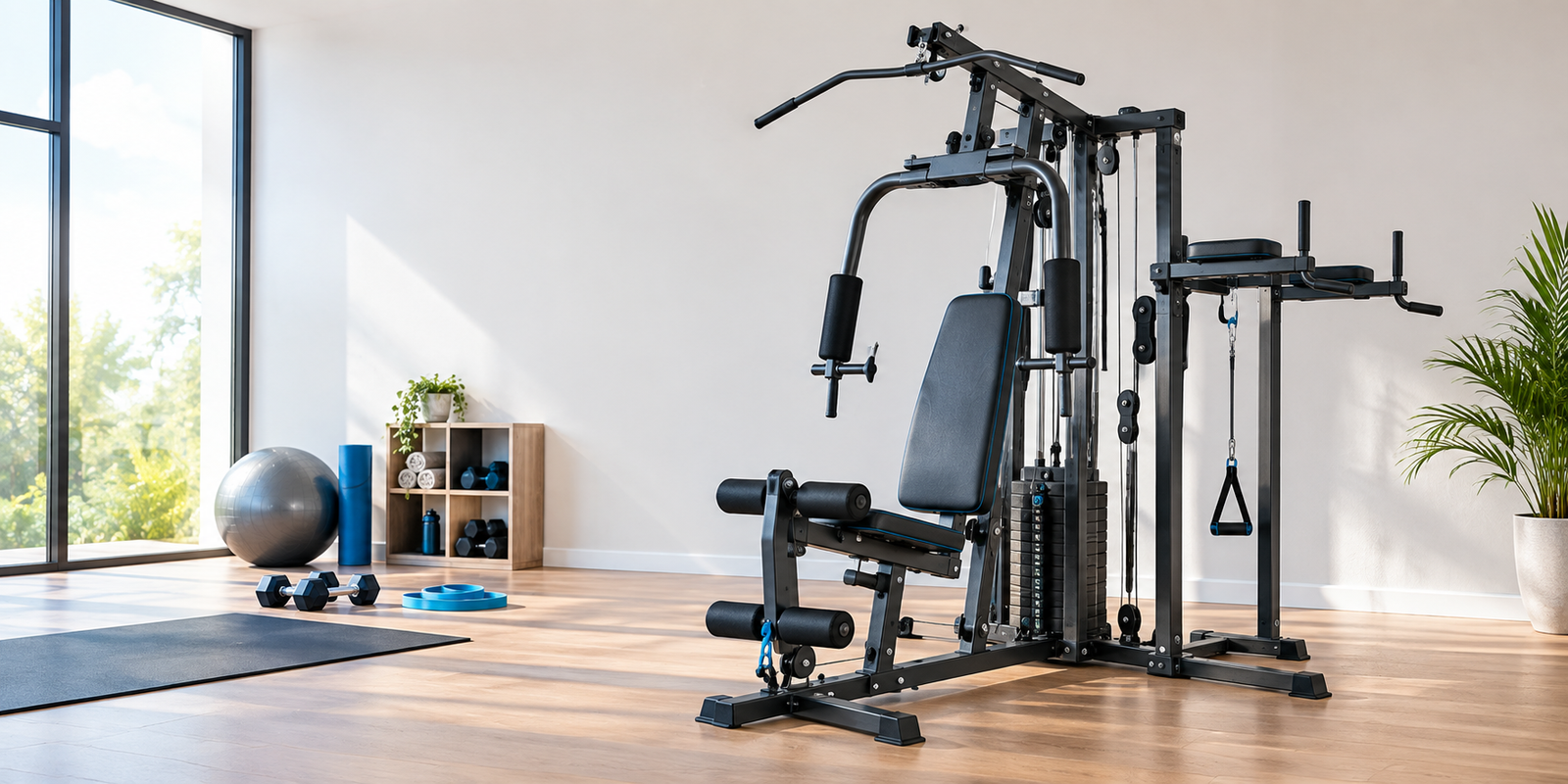

If you have ever been confused about how to use a multi-station gym system, you are not alone. The gym station is a little complicated with its wires, pulleys, and adjusters, but it is easy to use. After learning how to use the multi-station gym equipment, you will find dozens of different exercises to perform without having to change your equipment. In this article, we will explore the concept of the station training program, analyze different exercises based on their movement types, and discuss how to plan out your workouts.
What Makes Gym Station Workouts Different?
Gym station workouts use adjustable resistance mechanism, constant motion, and various forms of exercise in the same machine. Unlike working with free weights, which requires constant control on the part of the user, cable stations and machines provide greater stability while doing the exercise.
The right gym stations for sale make it easy to alter the level of resistance, target specific muscles, and switch to a new exercise without changing the apparatus. Moreover, all these devices allow users to perform complete workouts & exercises.
Complete Gym Station Exercise Breakdown
This is the part that actually matters day to day. Below is a breakdown of core station exercises to do on fitness equipment Melbourne, organized by movement pattern, each with the muscles worked, how to set up, how to perform it, and who it suits best.
Upper-Body Push Exercises
Push movements use resistance, meaning weight, moving away from the body and focusing on the muscle actions of the chest, shoulders, and triceps. Due to the importance of this movement in upper body strength programs, push movements can be done from either a sitting or standing position.
Shoulder Press
Primary muscles: Shoulders, triceps
Setup: Handles set at shoulder height, seated with a neutral spine
How to perform it: Press overhead till the arms are near-straight; lower with control
Key form cue: Avoid arching the lower back to compensate
Best suited for: Building shoulder strength and overhead stability
Cable Chest Press
Primary muscles: Chest, front shoulders
Setup: Standing, cables set at chest height, split stance for balance
How to perform it: Press both handles forward, squeezing the chest at full extension
Key form cue: Keep a slight forward lean; don’t let the cables pull you backward
Best suited for: Adding a stability challenge to a standard pressing movement
Triceps Pressdown
Primary muscles: Triceps
Setup: Cable set high, attachment at chest height, standing tall
How to perform it: Push the attachment down until arms are fully extended
Key form cue: Keep elbows pinned to your sides throughout
Best suited for: Isolating triceps with no shoulder involvement
Upper-Body Pull Exercises
Opposite to push movements, pull exercises are performed to get the resistance towards the body and to work the back and biceps. Pulling movements are also useful for developing strength and coordination in the shoulder and back muscles.
Lat Pulldown
Primary muscles: Lats, biceps
Setup: Seated, thighs secured under the pad, bar overhead
How to perform it: Pull the bar down to upper chest height, then control it back up
Key form cue: Drive elbows down and back, avoid leaning too far
Best suited for: Building back width and pulling strength
Seated Cable Row
Primary muscles: Mid-back, lats, biceps
Setup: Seated with feet positioned firmly, knees softly flexed, handle at chest height
How to perform it: Bring the handle toward your waist while keeping your shoulder blades retracted
Key form cue: Keep the torso still; don’t rock to generate momentum
Best suited for: Building overall back thickness
Cable Curl
Primary muscles: Biceps
Setup: Cable set low, standing with a straight bar or rope attachment
How to perform it: Curl the attachment up, keeping upper arms still
Key form cue: Avoid swinging the torso to assist the lift
Best suited for: Isolated bicep development
Lower-Body Exercises
Lower body exercises on gym benches and stations usually aim at the biggest muscles in the hips, thighs, and legs such as quadriceps, hamstrings, and gluteal muscles. The setups for lower body movements can involve both isolated movements and functional ones.
Leg Extension
Primary muscles: Quads
Setup: Seated, shins behind the padded lever
How to perform it: Extend the legs until straight, then lower with control
Key form cue: Avoid using momentum to kick the weight up
Best suited for: Isolating the quads directly
Leg Curl
Primary muscles: Hamstrings
Setup: Lying or seated, ankles behind the padded lever
How to perform it: Curl the legs toward the glutes, then extend back slowly
Key form cue: Keep hips pressed down throughout
Best suited for: Balancing quad-dominant training with hamstring work
Cable Glute Kickback
Primary muscles: Glutes
Setup: Ankle cuff attached low, facing the machine
How to perform it: Kick the leg back and up, squeezing the glute at the top
Key form cue: Avoid arching the lower back to gain extra range
Best suited for: Direct glute isolation
Core and Stability Exercises
Core training helps strengthen the muscles that are necessary for maintaining stability of the trunk during any activity. Cable exercises make it possible to work on the familiar core movements but with added resistance and increased difficulty for the anti-rotation, flexion, or rotation actions.
Cable Crunch
Primary muscles: Abs
Setup: Kneeling below a high cable, rope attachment behind the head
How to perform it: Crunch forward, bringing elbows toward the knees
Key form cue: Move through the spine instead of hips
Best suited for: Adding resistance to standard ab training
Pallof Press
Primary muscles: Obliques, deep core
Setup: Cable at chest height, standing side-on to the machine
How to perform it: Press the handle straight out and hold, resisting rotation
Key form cue: Keep hips and shoulders square throughout
Best suited for: Building anti-rotation core strength
Standing Cable Rotation
Primary muscles: Obliques, core
Setup: Cable at chest height, standing side-on with arms extended
How to perform it: Rotate the torso away from the machine, then return with control
Key form cue: Keep the arms fixed relative to the torso, rotate as one unit
Best suited for: Building rotational core control at a manageable intensity
How Many Sets and Reps Should You Do on Station Workouts?
Honestly, there’s no single rep range that works for every individual, because in an actual sense your programming should match your goal. The table below is a starting reference that might help you while working out on your gym stations for home.
| Goal | Typical Approach | Main Focus |
| Strength | Lower repetitions, higher resistance | Technique and force production |
| Muscle growth | Moderate repetitions and sufficient volume | Progressive overload |
| Muscular endurance | Higher repetitions, lighter resistance | Sustaining effort |
| General fitness | Moderate resistance and balanced volume | Consistency and movement quality |
How to Progress With Gym Station Workouts
Progress on a station setup doesn’t have to mean constantly adding weight. There are several levers you can pull, often in this order:
- Increase Resistance Gradually: Small, consistent increases beat big jumps that wreck your form
- Add Repetitions Before Increasing Load: Build capacity at your current weight first
- Improve Range of Motion: A fuller stretch and contraction does more than a heavier partial rep
- Improve Exercise Control: Slower, more deliberate reps increase time under tension without adding load
- Increase Training Volume When Appropriate: More total sets, once recovery allows for it
- Track Your Workouts: Writing down weights and reps is the easiest way to know you’re actually progressing, not just guessing
See also: Why Versatile Outerwear Matters in a Busy Modern Lifestyle
Conclusion
Through its design, station training gains fame as something that helps remove a lot of the setup friction that prevents people from training regularly; the movement paths are guided, the resistance adjustable, and one compact area covers pushes, pulls, legs, and core. Whether you work out at a commercial gym or you are in Australia looking at home gym stations for sale, having to know the exercises and how to progress them is what turns a station from a piece of gym equipment into an actual training system.
