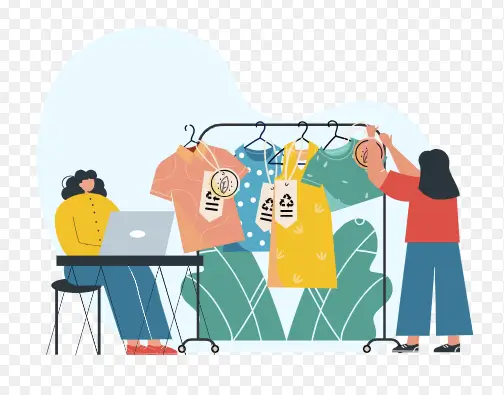

Brand identity today extends beyond logos and taglines into the products a company chooses to associate itself with. Eco-friendly clothing has become one of the clearest ways for a business to demonstrate its values, whether through employee uniforms, promotional giveaways, or retail apparel lines. Customers increasingly evaluate a company not only on the quality of its products but on the choices behind how those products are made.
This shift means that apparel decisions once treated as purely operational, such as which vendor supplies uniforms or event shirts, now carry brand implications. A company that outfits its staff in eco-friendly clothing sends a quiet but consistent signal about its priorities every time an employee interacts with a customer or attends an industry event.
Sustainable Uniforms and Employee Perception
Sustainable uniforms do more than reduce a company’s environmental footprint. They also influence how employees perceive their employer. Workers who wear uniforms made from environmentally friendly apparel often report a stronger sense of pride in their organization, particularly when the company communicates why it made that sourcing decision. This internal effect can support retention and engagement, both of which carry real cost implications for growing businesses.
From a practical standpoint, sustainable uniforms are no longer a compromise on durability. Modern environmentally friendly apparel is engineered to withstand repeated washing, physical activity, and daily wear at a level comparable to conventional fabrics. Businesses no longer need to choose between sustainability and performance when outfitting their teams.
Sourcing Sustainable Clothing Brands at Scale
Finding sustainable clothing brands that can supply consistent volume is one of the biggest hurdles for companies scaling their eco-friendly initiatives. Smaller sustainable labels often lack the production capacity for large corporate orders, which historically pushed bulk buyers back toward conventional suppliers. That gap has narrowed considerably as more established sustainable clothing brands have expanded manufacturing capacity to meet wholesale demand.
Working with a distributor that carries multiple sustainable clothing brands under one account simplifies the sourcing process considerably. Rather than managing separate relationships with several boutique suppliers, a business can consolidate purchasing while still accessing a range of environmentally friendly apparel options suited to different budgets and use cases.
Green Fashion as a Marketing Asset
Green fashion choices give marketing teams tangible material to work with. Case studies, behind-the-scenes sourcing stories, and sustainability reports all become more compelling when a company can point to specific, verifiable choices in its apparel supply chain. This is particularly valuable for businesses competing in crowded markets where product differentiation is difficult to achieve through price or features alone.
Ethical apparel decisions also reduce reputational risk. Companies that fail to scrutinize their supply chains occasionally face public backlash when poor labor or environmental practices come to light. Proactively choosing ethical apparel and communicating that choice clearly helps insulate a brand from this type of exposure while building a more resilient reputation over time.
Building a Stronger Brand Through Apparel Choices
A brand’s apparel choices touch nearly every customer-facing moment, from trade show booths to delivery drivers to retail associates. Each of these touchpoints offers an opportunity to reinforce a company’s values through the simple act of what people are wearing. Businesses that treat apparel sourcing as a strategic decision rather than an afterthought often find that the investment pays dividends in customer loyalty and brand recall.
Working with a reliable supplier makes this strategy easier to execute consistently. Simplstc Apparel supports businesses seeking wholesale blank apparel options that align with broader sustainability goals, giving companies a dependable source for bulk orders without sacrificing brand values.
For companies specifically prioritizing eco-conscious sourcing, Allmade Apparel offers a catalog built around recycled and organic materials, making it a practical choice for brands that want their apparel decisions to match their public commitments.
See also: Crypto and the Global Economy: What’s the Connection?
Balancing Cost and Values When Sourcing Apparel
One of the most common concerns businesses raise when considering eco-friendly clothing is whether the shift will strain existing budgets. In practice, most companies do not need to convert their entire apparel program at once. Starting with a single product category, such as branded outerwear or event shirts, allows a business to test supplier reliability and gauge how customers or employees respond before expanding the commitment further.
Procurement teams can also negotiate more favorable terms by consolidating orders across multiple sustainable clothing brands through a single wholesale distributor rather than managing several smaller vendor relationships independently. This approach reduces administrative overhead while still giving a business access to a broad range of environmentally friendly apparel suited to different price points and use cases.
It also helps to set realistic expectations internally. Eco-conscious sourcing is rarely an all-or-nothing decision, and businesses that frame it as an ongoing improvement process tend to sustain their commitment longer than those that attempt a complete overhaul immediately. Small, consistent steps toward ethical apparel sourcing often build more credibility with customers than a single large announcement that is difficult to maintain.
Long-Term Value of Sustainable Branding
The businesses that benefit most from eco-friendly clothing initiatives tend to view them as part of a long-term brand strategy rather than a short-term marketing tactic. Sustainability expectations among consumers and regulators continue to rise, and companies that establish credible practices early are better positioned to adapt as those expectations become industry standard.
This long-term view also extends to employee relationships. Staff members who see their employer make consistent, verifiable choices regarding sustainable uniforms and ethical apparel often develop greater loyalty to the organization, which can translate into lower turnover and a stronger internal culture over time.
Frequently Asked Questions
How does eco-friendly clothing affect customer perception of a brand?
Customers often view companies that choose eco-friendly clothing as more socially responsible and forward-thinking. This perception can strengthen brand loyalty and influence purchasing decisions, particularly among younger and more environmentally conscious demographics.
Are sustainable uniforms durable enough for daily workplace use?
Yes, sustainable uniforms made from modern environmentally friendly apparel are designed to withstand daily wear, frequent washing, and physical activity at a level comparable to conventional uniform fabrics.
What should a business look for when choosing sustainable clothing brands?
Businesses should evaluate production capacity, material certifications, pricing at scale, and transparency around labor practices when selecting sustainable clothing brands for bulk orders.
Can eco-conscious apparel choices reduce a company’s reputational risk?
Proactively sourcing ethical apparel and communicating those choices can reduce the risk of reputational damage associated with poor labor or environmental practices elsewhere in the supply chain.
Is switching to eco-friendly clothing a costly change for most businesses?
The cost difference has narrowed significantly as demand has grown, and many businesses phase in eco-friendly clothing gradually, starting with high-visibility categories like uniforms or promotional apparel before expanding further.
